
We design the architecture of security
AE Building Technologies engineering team designs not only the installation but also the foundation of security systems.
Fire detection, CCTV, access control, announcement and automation systems; Where it will be located, how it will communicate, and in which scenarios it will come into play are calculated down to the smallest detail.
Each project starts from an architectural plan, but turns into a living system in the hands of AE engineering.
Because we know: true not calculated No system works correctly in the field.
Our job is not to lay cables, but to establish logic.
Our engineers consider every detail that makes up the system:
How many devices will be used, which cable route will be the most efficient, which system will react in which scenario…
Once these plans are completed, the work to be done in the field is now just implementation.
Each gear represents a stage. Plan, calculation, document, audit, commissioning... Every turn activates the mind of the system. Turn the wheel and feel the rhythm of engineering. Because At AE, trust operates continuously.
Engineering Wheel
Project Analysis and Planning
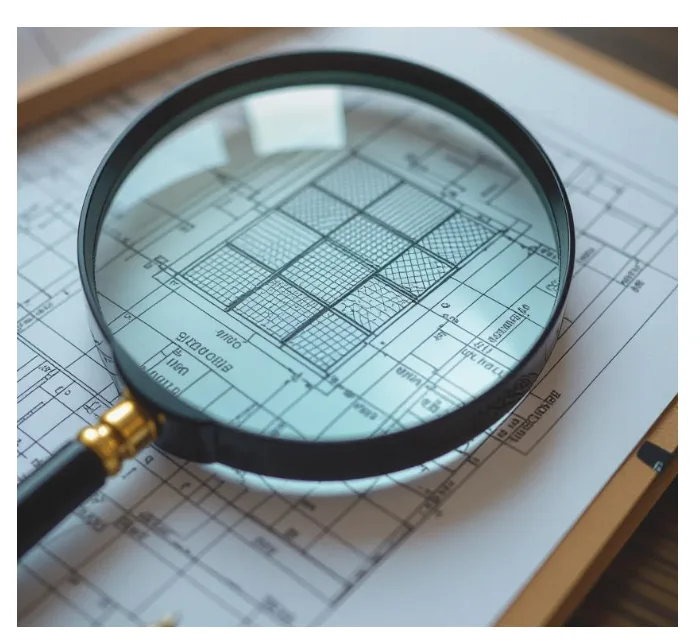
Each building is shaped at the intersection of hundreds of decisions before it is completed. The most critical of those decisions for us is where security begins and ends. AE Building Technologies engineers are involved in the process after the architectural project is completed; Because from that point on, the invisible side of the building, that is, the intelligence layer, begins to be designed. The infrastructure of fire, security, automation and communication systems is included in the plans as a silent extension of the architecture. Each line represents the location of a device in the future; each symbol represents the beginning of a scenario.
The analysis process is not limited to just looking at plans; It starts with understanding the need behind those plans.
The type of building, purpose of use, human circulation, emergency exits, energy intensity and access areas are evaluated individually. AE engineers predict not only the layout of systems, but also how they will behave. This approach transforms an ordinary technical project into a living organism blueprint. Because for AE, engineering is not about drawing, but about turning prediction into mathematics.
All planning work is carried out on AutoCAD with millimetric precision. Every cable line, every device location, every port is meticulously processed. Each measurement made at this stage serves as a reference for all subsequent processes of the project. AE's engineering discipline is based on leaving no room for surprises in the field. The first day the system will operate actually starts at the planning table.
Field coordination comes into play when the subcontractor company prepares for installation. The AE team works with the subcontractor to make final revisions before implementation. If there is an architectural or structural change in the building, technical engineers quickly update the plans and adapt them to the new situation. This agility is the most important difference of AE. No project is frozen, no plan is left behind. The engineering team produces the solution that will maintain the accuracy of the system in all cases.
And at the end of this whole process, everything is actually already completed before we go out into the field. AE Building Technologies' plans tell not only how the system will be installed, but also how it will work. Because we do not build a building; We design the order and trust within it. Each plan is a silent work of engineering that draws the invisible heart of a structure.
Each building is shaped at the intersection of hundreds of decisions before it is completed. The most critical of those decisions for us is where security begins and ends. AE Building Technologies engineers are involved in the process after the architectural project is completed; Because from that point on, the invisible side of the building, that is, the intelligence layer, begins to be designed. The infrastructure of fire, security, automation and communication systems is included in the plans as a silent extension of the architecture. Each line represents the location of a device in the future; each symbol represents the beginning of a scenario.
The analysis process is not limited to just looking at plans; It starts with understanding the need behind those plans.
The type of building, purpose of use, human circulation, emergency exits, energy intensity and access areas are evaluated individually. AE engineers predict not only the layout of systems, but also how they will behave. This approach transforms an ordinary technical project into a living organism blueprint. Because for AE, engineering is not about drawing, but about turning prediction into mathematics.
All planning work is carried out on AutoCAD with millimetric precision. Every cable line, every device location, every port is meticulously processed. Each measurement made at this stage serves as a reference for all subsequent processes of the project. AE's engineering discipline is based on leaving no room for surprises in the field. The first day the system will operate actually starts at the planning table.
Field coordination comes into play when the subcontractor company prepares for installation. The AE team works with the subcontractor to make final revisions before implementation. If there is an architectural or structural change in the building, technical engineers quickly update the plans and adapt them to the new situation. This agility is the most important difference of AE. No project is frozen, no plan is left behind. The engineering team produces the solution that will maintain the accuracy of the system in all cases.
And at the end of this whole process, everything is actually already completed before we go out into the field. AE Building Technologies' plans tell not only how the system will be installed, but also how it will work. Because we do not build a building; We design the order and trust within it. Each plan is a silent work of engineering that draws the invisible heart of a structure.
Technical Calculations and Bill of Materials
Every project comes to life with accurate calculations. When AE engineers focus on a plan, they focus not only on the cable lines; It looks at the logic, possibilities and energy flow behind those lines. Every point on the AutoCAD screen is a projection of a future decision: The detection distance of a detector, the viewing angle of a camera, the load balance of a panel, the resistance of a cable... Each of them is a separate element of trust, each of them is an invisible value beating at the heart of the system.
At this stage, it is determined not only where the devices will be placed, but also what feature, brand and model they will be. Each project has a separate structure according to its own specifications and purpose; However, AE's engineering always keeps the quality bar at the same level, regardless of the brand. In most projects, the reliability of Honeywell systems comes to the fore, because what is important for AE is not only the installation, but also the guarantee of a system that will operate sustainably for years.
Reliability is planned at every connection point and longevity is planned for every circuit.
Calculation process; It is a meticulous work that extends from balancing electrical loads to cable length, from device addressing to communication topology. The engineering team simulates all scenarios in advance to ensure that not a single meter of cable is wasted in the field. In this process, not only the hardware but also the human factor is taken into account; Ease of installation, maintenance access and service continuity are also included in the plan. Because AE's engineering approach is based not only on technical but also operational intelligence.
Each plan prepared is actually a guide sent to the field. When subcontractor teams look at these plans, they understand not what to install where, but why to install it that way. Every cable, every device, every connection line; It is included in the plan as justified, tested and verified. For AE engineers, the “bill of materials” is not an inventory, but a description of a system that will work perfectly.
And that's why the drawings prepared by AE are not just technical documents; They are the preface of an order that will come to life on the field. A system is experienced, tested, measured and rewritten many times on AE's computer screen before it goes into the field. In the end, that plan is no longer a file, but the silent plan of a system that will operate safely in the future.
Every project comes to life with accurate calculations. When AE engineers focus on a plan, they focus not only on the cable lines; It looks at the logic, possibilities and energy flow behind those lines. Every point on the AutoCAD screen is a projection of a future decision: The detection distance of a detector, the viewing angle of a camera, the load balance of a panel, the resistance of a cable... Each of them is a separate element of trust, each of them is an invisible value beating at the heart of the system.
At this stage, it is determined not only where the devices will be placed, but also what feature, brand and model they will be. Each project has a separate structure according to its own specifications and purpose; However, AE's engineering always keeps the quality bar at the same level, regardless of the brand. In most projects, the reliability of Honeywell systems comes to the fore, because what is important for AE is not only the installation, but also the guarantee of a system that will operate sustainably for years.
Reliability is planned at every connection point and longevity is planned for every circuit.
Calculation process; It is a meticulous work that extends from balancing electrical loads to cable length, from device addressing to communication topology. The engineering team simulates all scenarios in advance to ensure that not a single meter of cable is wasted in the field. In this process, not only the hardware but also the human factor is taken into account; Ease of installation, maintenance access and service continuity are also included in the plan. Because AE's engineering approach is based not only on technical but also operational intelligence.
Each plan prepared is actually a guide sent to the field. When subcontractor teams look at these plans, they understand not what to install where, but why to install it that way. Every cable, every device, every connection line; It is included in the plan as justified, tested and verified. For AE engineers, the “bill of materials” is not an inventory, but a description of a system that will work perfectly.
And that's why the drawings prepared by AE are not just technical documents; They are the preface of an order that will come to life on the field. A system is experienced, tested, measured and rewritten many times on AE's computer screen before it goes into the field. In the end, that plan is no longer a file, but the silent plan of a system that will operate safely in the future.
Application Documents
A system is planned before it goes into the field; But whether that plan works depends on how it is explained. Each application document prepared at AE Building Technologies is not just a drawing or a list of materials, it is a guiding scenario that describes the intelligence of a building step by step. Every line, every symbol, every description; It shows a clear, understandable and measurable path to the teams that will carry out the application. These documents are the first step in turning theory into practice in the field.
The engineering team considers every possibility when creating technical plans. Every detail, from the reach of a sensor to the cable route of a camera, is modeled exactly in the AutoCAD environment. Each project is prepared according to its own nature; Safety is a priority for hospitals, durability-based for industrial facilities, and comfort-focused for residences. The plans prepared by AE combine these different needs into a single standard. Accuracy, continuity and traceability.
The application documents given to subcontractors explain not only “how to do it” but also “why it should be done that way”. Material types to be used, cable cross-sections, junction boxes, device mounting heights… are all specified one by one. These documents, in which every job is checked by an engineer, eliminate the margin of error and leave no room for indecision in the field. Thus, when every technician steps into the field, he sees an engineering vision, not a plan.
AE's documentation culture not only produces plans, but also communicates them. Each page describes how the system will behave; Information such as alarm scenarios, cable labeling, device coding and connection diagrams give confidence to subcontractor teams. Each document is a translation of the steps in the field into a pre-thought-out choreography by engineering. Therefore, AE plans are not a one-time drawing for each project, but a living record of discipline and experience.
And the most important part is; These documents are just for starters but will remain a lifelong reference. Even when the project is completed, the documents prepared by AE are reopened, re-read and brought to life again during the maintenance, revision and expansion processes of the system. Because a plan for AE Building Technologies manages not only the implementation but also the future. Each drawing carries both the past and future of a system. This is the enduring language of engineering.
A system is planned before it goes into the field; But whether that plan works depends on how it is explained. Each application document prepared at AE Building Technologies is not just a drawing or a list of materials, it is a guiding scenario that describes the intelligence of a building step by step. Every line, every symbol, every description; It shows a clear, understandable and measurable path to the teams that will carry out the application. These documents are the first step in turning theory into practice in the field.
The engineering team considers every possibility when creating technical plans. Every detail, from the reach of a sensor to the cable route of a camera, is modeled exactly in the AutoCAD environment. Each project is prepared according to its own nature; Safety is a priority for hospitals, durability-based for industrial facilities, and comfort-focused for residences. The plans prepared by AE combine these different needs into a single standard. Accuracy, continuity and traceability.
The application documents given to subcontractors explain not only “how to do it” but also “why it should be done that way”. Material types to be used, cable cross-sections, junction boxes, device mounting heights… are all specified one by one. These documents, in which every job is checked by an engineer, eliminate the margin of error and leave no room for indecision in the field. Thus, when every technician steps into the field, he sees an engineering vision, not a plan.
AE's documentation culture not only produces plans, but also communicates them. Each page describes how the system will behave; Information such as alarm scenarios, cable labeling, device coding and connection diagrams give confidence to subcontractor teams. Each document is a translation of the steps in the field into a pre-thought-out choreography by engineering. Therefore, AE plans are not a one-time drawing for each project, but a living record of discipline and experience.
And the most important part is; These documents are just for starters but will remain a lifelong reference. Even when the project is completed, the documents prepared by AE are reopened, re-read and brought to life again during the maintenance, revision and expansion processes of the system. Because a plan for AE Building Technologies manages not only the implementation but also the future. Each drawing carries both the past and future of a system. This is the enduring language of engineering.
Field Inspection
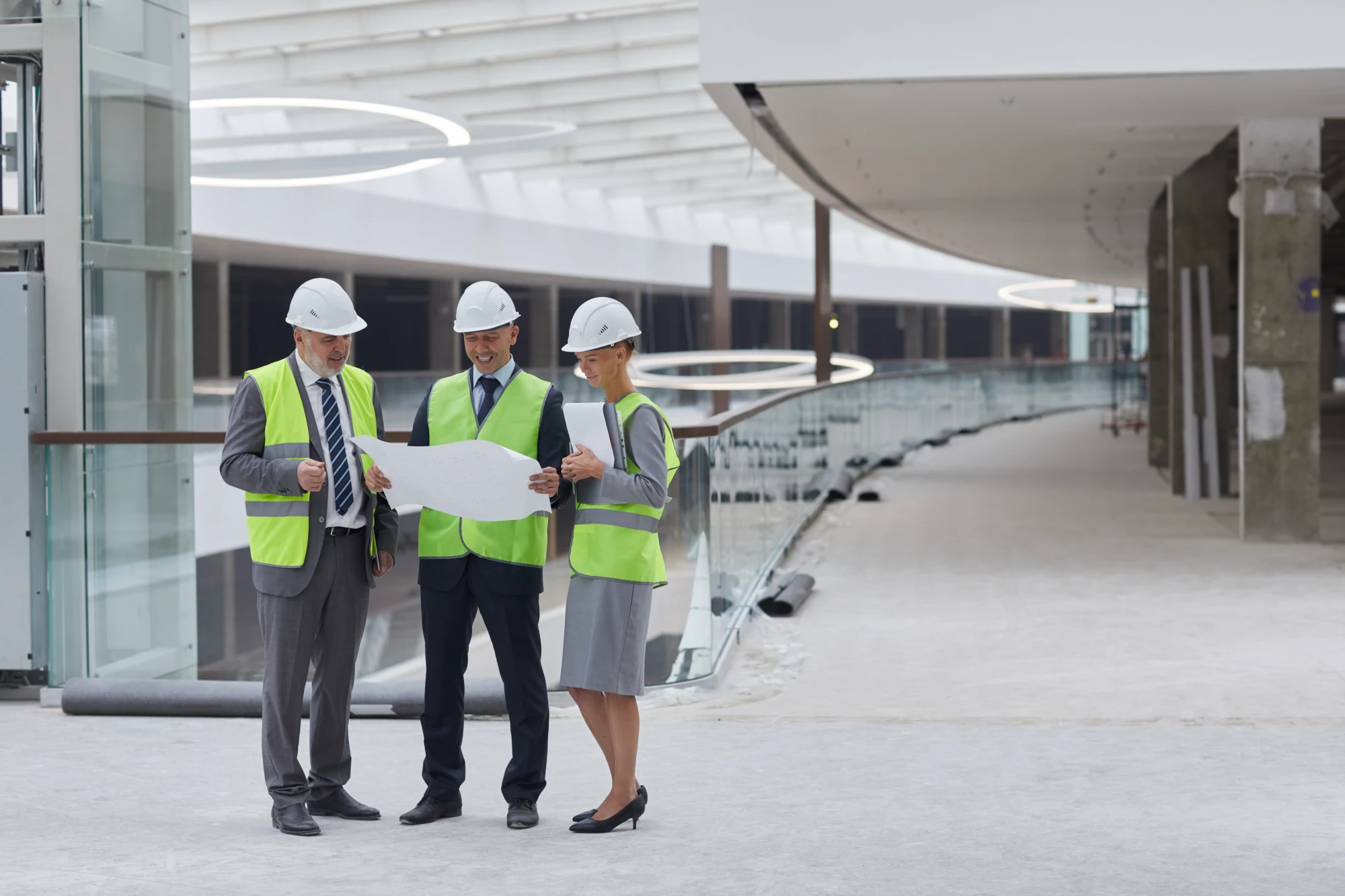
A project may look perfect on paper. But engineering takes its real test the moment it leaves the drawing board. For AE Building Technologies, site inspection is not the control of plans, but the verification of the vision. The supervisor engineer assigned to each project is not just an observer in the field, but a guide who keeps his finger on the pulse of the system. It is ensured that every cable, every connection, every panel is in the right place and working correctly.
The AE team doesn't just inspect the site; guides, teaches, develops. It actively participates in the assembly processes of subcontractor teams and ensures that the standards stipulated in the engineering plans are implemented exactly. When a circuit is connected incorrectly, when a cable route deviates from the plan, the integrity of the system is compromised. The existence of AE is to prevent these errors from ever occurring. The supervisor is in constant communication with not only the teams in the field but also the plan.
Because in AE's understanding, the project is a living thing; Engineering breathes at every step.
Throughout the audit process, regular meetings are held in the field, progress reports are created and each stage is documented. Each check is completed before moving on to the next step; No detail is postponed by saying "we'll see later". This meticulousness is the basis for AE to achieve a zero error rate in its security systems. Every wiring connection is like a bond of trust, every test is like a sentence of approval. Because when AE goes into the field, safety becomes measured in reality, not just in plans.
The supervisor engineer works as a coordination center in the project beyond technical control. It optimizes the teams' workflow and ensures that the subcontractor progresses quickly and accurately. Every day in the field consists of dozens of small decisions;
and AE engineering knows that those small decisions can have big results. That's why it treats every cable, every connector, every tag number with the same seriousness.
When the project is completed, what remains is not just a finished system, but an engineering story woven with discipline. The presence of AE Building Technologies on the field is an invisible guarantee for everyone who knows that the system will operate safely. Because AE oversees the beginning of perfection, not the end of execution. Each check is a moment when trust is tested and confirmed once again. And that's when engineering truly comes to life.
A project may look perfect on paper. But engineering takes its real test the moment it leaves the drawing board. For AE Building Technologies, site inspection is not the control of plans, but the verification of the vision. The supervisor engineer assigned to each project is not just an observer in the field, but a guide who keeps his finger on the pulse of the system. It is ensured that every cable, every connection, every panel is in the right place and working correctly.
The AE team doesn't just inspect the site; guides, teaches, develops. It actively participates in the assembly processes of subcontractor teams and ensures that the standards stipulated in the engineering plans are implemented exactly. When a circuit is connected incorrectly, when a cable route deviates from the plan, the integrity of the system is compromised. The existence of AE is to prevent these errors from ever occurring. The supervisor is in constant communication with not only the teams in the field but also the plan.
Because in AE's understanding, the project is a living thing; Engineering breathes at every step.
Throughout the audit process, regular meetings are held in the field, progress reports are created and each stage is documented. Each check is completed before moving on to the next step; No detail is postponed by saying "we'll see later". This meticulousness is the basis for AE to achieve a zero error rate in its security systems. Every wiring connection is like a bond of trust, every test is like a sentence of approval. Because when AE goes into the field, safety becomes measured in reality, not just in plans.
The supervisor engineer works as a coordination center in the project beyond technical control. It optimizes the teams' workflow and ensures that the subcontractor progresses quickly and accurately. Every day in the field consists of dozens of small decisions;
and AE engineering knows that those small decisions can have big results. That's why it treats every cable, every connector, every tag number with the same seriousness.
When the project is completed, what remains is not just a finished system, but an engineering story woven with discipline. The presence of AE Building Technologies on the field is an invisible guarantee for everyone who knows that the system will operate safely. Because AE oversees the beginning of perfection, not the end of execution. Each check is a moment when trust is tested and confirmed once again. And that's when engineering truly comes to life.
Put in to use
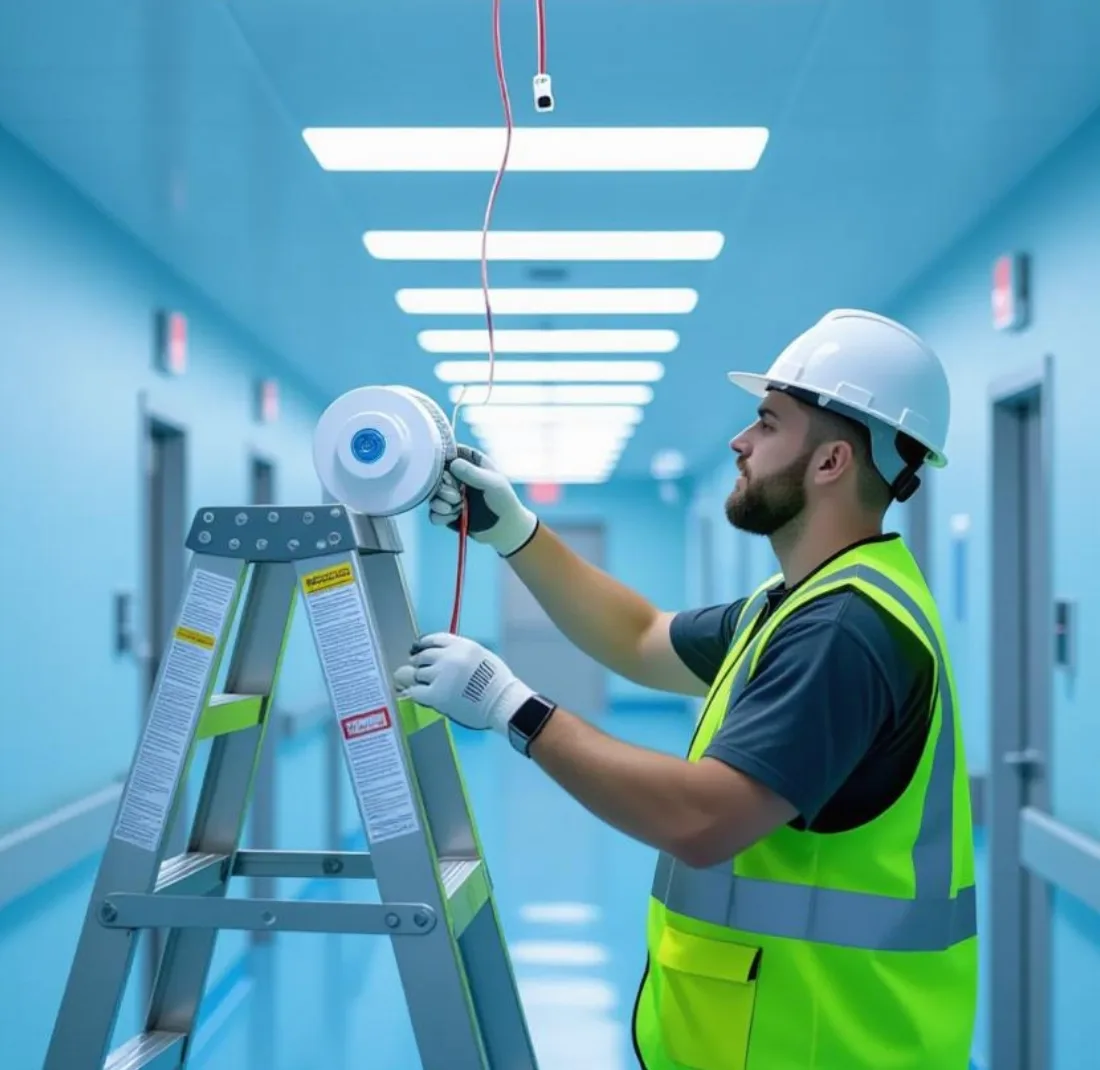
A system is just an idea before it is deployed. Cables are laid, panels are placed, devices are connected… but it's all silent. Until AE engineers stepped into the field. At that moment, the plans come true, a pulse travels along the energy lines, the veins of the building come to life for the first time. Commissioning is the moment when that pulse is felt, when engineering passes from invisible to visible.
At AE Building Technologies, the commissioning process is not limited to just pressing buttons or operating systems. Each sensor, each module, each circuit is tested individually; Even the smallest margin of error is unacceptable. Test protocols are prepared according to international standards and every component of the system passes these standards. For AE engineers, this process is not a check, but an approval ceremony. Because each test is official proof that that system has been put into operation safely. The response time of a detector, the data transfer of a camera, the clarity of an announcement... they are all like a separate signature.
Once all components of the system have been tested, the AE team gets to the heart of the integration. Fire alarm, access control, CCTV, voice alarm and building automation are synchronized in a single center. Each system responds to the other; The fire detector sends a signal, the door is unlocked, and the announcement system is activated. This perfect harmony is the most concrete form of AE's engineering philosophy. The timing, response time and concurrency of each function are tested many times, because for AE it is not enough to "work", it must work correctly.
When the testing process is completed, all documents of the system are prepared: test reports, certification files, acceptance minutes... Each of them is prepared by AE engineers and delivered with the project. These documents are not only a technical requirement, but also the security memory of the system. Even if a change will be made in the system one day, these documents prepared by AE will be the compass of a new installation. Because AE activates not only the beginning of the system, but also its future.
And at that last moment, with all the tests completed and all systems working simultaneously, there is silence on the field. One engineer looks at the monitor, another listens to the panel, another watches the light display. Then that small but significant moment happens: all the indicators turn green. This isn't just a rollout; It is proof that months of effort work flawlessly.
At that moment, the building is no longer just a structure. It is a system that started to live with the thought of engineering.
A project may look perfect on paper. But engineering takes its real test the moment it leaves the drawing board. For AE Building Technologies, site inspection is not the control of plans, but the verification of the vision. The supervisor engineer assigned to each project is not just an observer in the field, but a guide who keeps his finger on the pulse of the system. It is ensured that every cable, every connection, every panel is in the right place and working correctly.
The AE team doesn't just inspect the site; guides, teaches, develops. It actively participates in the assembly processes of subcontractor teams and ensures that the standards stipulated in the engineering plans are implemented exactly. When a circuit is connected incorrectly, when a cable route deviates from the plan, the integrity of the system is compromised. The existence of AE is to prevent these errors from ever occurring. The supervisor is in constant communication with not only the teams in the field but also the plan.
Because in AE's understanding, the project is a living thing; Engineering breathes at every step.
Throughout the audit process, regular meetings are held in the field, progress reports are created and each stage is documented. Each check is completed before moving on to the next step; No detail is postponed by saying "we'll see later". This meticulousness is the basis for AE to achieve a zero error rate in its security systems. Every wiring connection is like a bond of trust, every test is like a sentence of approval. Because when AE goes into the field, safety becomes measured in reality, not just in plans.
The supervisor engineer works as a coordination center in the project beyond technical control. It optimizes the teams' workflow and ensures that the subcontractor progresses quickly and accurately. Every day in the field consists of dozens of small decisions;
and AE engineering knows that those small decisions can have big results. That's why it treats every cable, every connector, every tag number with the same seriousness.
When the project is completed, what remains is not just a finished system, but an engineering story woven with discipline. The presence of AE Building Technologies on the field is an invisible guarantee for everyone who knows that the system will operate safely. Because AE oversees the beginning of perfection, not the end of execution. Each check is a moment when trust is tested and confirmed once again. And that's when engineering truly comes to life.
Philosophy
For us, engineering is not just technical knowledge; To foresee is to prevent mistakes before they occur.
Every cable line, every device, every port; It constitutes the invisible intelligence of the building.
We design that intelligence, subcontractor teams implement it, and we bring it to life.
AE engineering starts with a plan and ends with confidence.